
The gains were capped due to month-end dollar demand from importers, mainly oil firms
In New York, the dollar fell against the British pound on Wednesday after the Bank of England raised its projections for UK growth in 2014. However, analysts warned that gains against the dollar could be limited.

Equity benchmarks began the week on a downbeat note on Monday, weighed by heavy selling in market heavyweight Reliance Industries and persisting weakness in global bourses. The rupee plunged to its lifetime low against the US dollar amid unabated foreign fund outflows, underscoring the risk-off sentiment prevailing globally as central banks embark on policy tightening to tame soaring inflation. Slipping for the second straight session, the 30-share BSE Sensex shed 364.91 points or 0.67 per cent to close at 54,470.67.

'The finance ministry and the RBI will never admit to the difficulties in the economy because if they do so, it will adversely impact the financial markets, etc.' 'They like to present a rosy picture that everything is fine and under control.'

'During Congress rule, the government used to get both the fishermen and the boats released whenever the Sri Lankan navy apprehended them.' 'Under BJP rule, only the fishermen are being released.'

A delay in US Federal Reserve's quantitative easing tapering, coupled with better-than-expected September quarter earnings, ensured FIIs kept foreign money flowing into Indian equities.

Tech Mahindra was the top loser in the Sensex pack, shedding over 3 per cent, followed by NTPC, IndusInd Bank, Kotak Bank and Reliance Industries. NSE Nifty fell 185.60 points to 17,671.65.

'I was shocked by the kidnapping episode. I could have lost my life.'

Mixed earnings and not so encouraging macroeconomic data dented sentiment, Ajit Mishra, VP - Research, Religare Broking Ltd said. In twin blows to Indian economic revival, higher food prices drove retail inflation to a five-month high of 7.4 per cent, while factory output fell for the first time in 18 months. The second consecutive month of rise in consumer price index (CPI)-based inflation will add to the pressure on the Reserve Bank of India (RBI) to again raise interest rates to tame high prices. In the broader market, BSE Midcap declined 0.73 per cent while smallcap dropped 0.45 per cent.
India is due to post industrial output later in the day, with analysts expecting a return to modest growth, and is due to post wholesale and consumer prices data next week amid expectations vegetable prices have eased.

The department of economic affairs, in its Monthly Economic Review for September, said critical reforms undertaken by the government will put India to a strong and sustainable growth path in the long run.
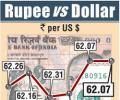
A fall in blue-chips such as Larsen and Toubro on anxiety ahead of the quarterly earnings season and inflation data hurt local shares.
Forex dealers said besides increased selling of the American currency by exporters and banks, the dollar's weakness against other currencies overseas also supported the rupee, but a lower opening in the domestic equity market limited the rise.

Marking a key milestone in the Indian government's fight against black money allegedly stashed abroad, India will get this month the complete information on flats, apartments and condominiums owned by Indians in Switzerland as also on earnings made from such properties to help it look into tax liabilities associated with those assets.
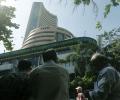
BSE benchmark Sensex plummeted over 388 points to close at 58,576.37 on Tuesday, tracking weakness in index majors Wipro, RIL and Bharti Airtel amid a weak trend in global markets. Investors also remained cautious ahead of crucial macroeconomic data announcements -- industrial production for February and inflation rate for March -- post trading hours. The Sensex declined 388.20 points or 0.66 per cent to settle at 58,576.37. During the day, the benchmark tanked 666 points or 1.12 per cent to 58,298.57.

IT stocks on Wednesday rose as much as 3 per cent in an otherwise weak stock market after sentiments turned buoyant amid the rupee sinking to an all-time low of 60.35 against the dollar, as the stronger US currency boosts the sales of software firms in rupee terms.

Anil Rego, CEO, Right Horizons, answers your personal income tax queries.

Traders expect the rupee to remain wedged between the 59.60 and 60.50 levels in the absence of any key triggers in the near-term.
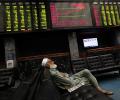
'Rawalpindi must downsize its quest for 'strategic depth' in Afghanistan and Kashmir,' suggests Matein Khalid.

Expressing serious concerns over the current account deficit touching a record 4.8 per cent in 2012-13, India Inc on Thursday asked the government to take all policy measures, including boosting exports and foreign exchange inflows to bring down CAD.

Stock market investors are expecting a balanced Budget with a focus on job creation, increased spending on infrastructure, reigning in the deficit, and bringing the economy back on track, experts said on Wednesday. Stock markets have been subdued in the run-up to the Union Budget with BSE's benchmark Sensex is almost flat so far this month. Even the corporate earning season failed to excite the markets, while some indices like IT and bankex have seen some positive movements.

Financial numbers can sometimes paint a rosy picture because of changes in the accounting policy or a one-time income.

Asian Paints was the top gainer after the paints major posted robust first quarter earnings.
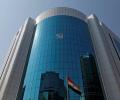
The regulator typically meets overseas investors in the US and UK in the first half of a financial year, and had opted for a virtual meet last year too.

A government can't just take away public money, and the RBI can't extinguish its liability. 'The RBI has to honour the value any time a person with legal and taxed money lays claim on the value.'

SBI was the top loser in the Sensex pack, shedding over 1 per cent, followed by Reliance Industries, Tech Mahindra, M&M, L&T, Bharti Airtel, IndusInd Bank and HDFC. NSE Nifty slipped 31.60 points to 15,824.45.
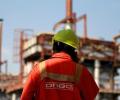
At a time when crude oil and natural gas prices are sky-high, public sector behemoth ONGC's haphazard planning and mismanagement in developing showpiece deep-sea KG-D5 block is costing the nation over Rs 18,000 crores due to the delayed output of oil and gas, government officials said. ONGC was originally to start gas production from the Cluster-II fields in block KG-DWN-98/2 (KG-D5) in June 2019 and the first oil was to flow in March 2020. But these targets were quietly shifted to end-2021 because of deferments in awarding the fragmented work packages of the project, two officials with direct knowledge of the matter said on condition of anonymity.

Benchmark indices bounced back on Wednesday after falling for five straight sessions, with investors snapping up the recently-mauled IT, finance and consumption stocks amid a supportive trend overseas. A rebounding rupee further bolstered sentiment, traders said. Halting its five-session slide, the BSE Sensex jumped 574.35 points or 1.02 per cent to finish at 57,037.50. Similarly, the NSE Nifty surged 177.90 points or 1.05 per cent to 17,136.55.

The Sensex jumped 412.23 points on Friday, braving heavy volatility during the day, amid the Reserve Bank of India maintaining status quo on the benchmark lending rate and buying in index heavyweights Reliance Industries Limited and ITC. The BSE Sensex climbed 412.23 points or 0.70 per cent to settle at 59,447.18. During the day, the benchmark hit a high of 59,654.44 and a low 58,876.36. The Nifty also gained 144.80 points or 0.82 per cent to finish at 17,784.35.

A sharp sell-off in the Indian equities markets after a spike in crude oil prices should not be surprising. Historically there is a negative correlation between stock valuations in India and the price of Brent crude oil, which is the benchmark for the Indian crude oil basket. Between 2011 and 2014, crude oil traded above $100 a barrel for an extended period, the Sensex-trailing price/earnings (P/E) was 18X, on average, during the period, nearly 22 per cent lower than the current index P/E of 23X.

India's equity markets are on a roller-coaster ride, after delivering spectacular returns for two consecutive years - in 2020 and 2021. The benchmark National Stock Exchange's (NSE's) Nifty50 is down 1.5 per cent in the first nine months of the current calendar year 2022 (CY22) as foreign portfolio investors sold Indian stocks due to rising bond yields in the US and across global markets, including India. The sell-off in the Indian equity markets has, however, not been broad-based and largely limited to sectors facing earnings headwinds from rising interest rates, lower commodity and energy prices, and likely economic recession in advanced economies.
Equity indices gave up early gains to close in the red for the third session on the trot on Wednesday, weighed by selling in banking and finance counters amid inflationary pressures and persistent foreign fund outflows. A weak rupee and lacklustre global cues also kept buying sentiment in check, traders said. The 30-share BSE Sensex opened on a firm footing but failed to hold on the momentum, finishing 237.44 points or 0.41 per cent lower at 58,338.93. On similar lines, the broader NSE Nifty dipped 54.65 points or 0.31 per cent to close at 17,475.65.

Asian Paints was the top gainer in the Sensex pack, rising around 3 per cent, followed by Kotak Bank, Axis Bank, HDFC Bank, Infosys, Reliance Industries and ITC. Broader NSE Nifty rallied 136.15 points or 1.02 per cent to its new record high of 13,529.10.

The prime minister said the opposition's hatred against him was reaching new levels daily and they have a competition over who abused him the most.

Prime Minister Narendra Modi on Saturday released Rs 20,946 crore to 10.09 crore farmers across India as the 10th installment of financial aid under the PM-KISAN scheme and said there was a need for innovation in agriculture along with promotion of natural farming. Under the Pradhan Mantri Kisan Samman Nidhi (PM-KISAN) scheme, a financial benefit of Rs 6,000 per year is provided to the eligible farmer families, payable in three equal installments of Rs 2,000. The PM-KISAN scheme was announced in the February 2019 Budget.

Sebi's main contention against brokers is that the NSEL was offering paired contracts and they were forward contracts, which were "illegal".
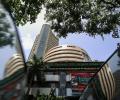
Infosys was the top gainer in the Sensex pack, rising around 3 per cent, followed by Bajaj Auto, SBI, ICICI Bank, HCL Tech, Titan and Asian Paints. NSE Nifty rose 19.85 points or 0.14 per cent to 13,760.55 -- its new closing record.

Bankers say outward remittances is confusing but can still be attributed to perception of stability in Indian economy.

'The variables to watch include the monsoon, resolution of NBFC liquidity issues, GST collections, and NPA resolution.'

If any foreign account holder violates Indian laws, tax authorities can enforce repatriation of funds.
 © 2026 Rediff.com - Advertise with us - Disclaimer - Privacy Policy - Sitemap - Feedback - About us - Terms of use - Grievances